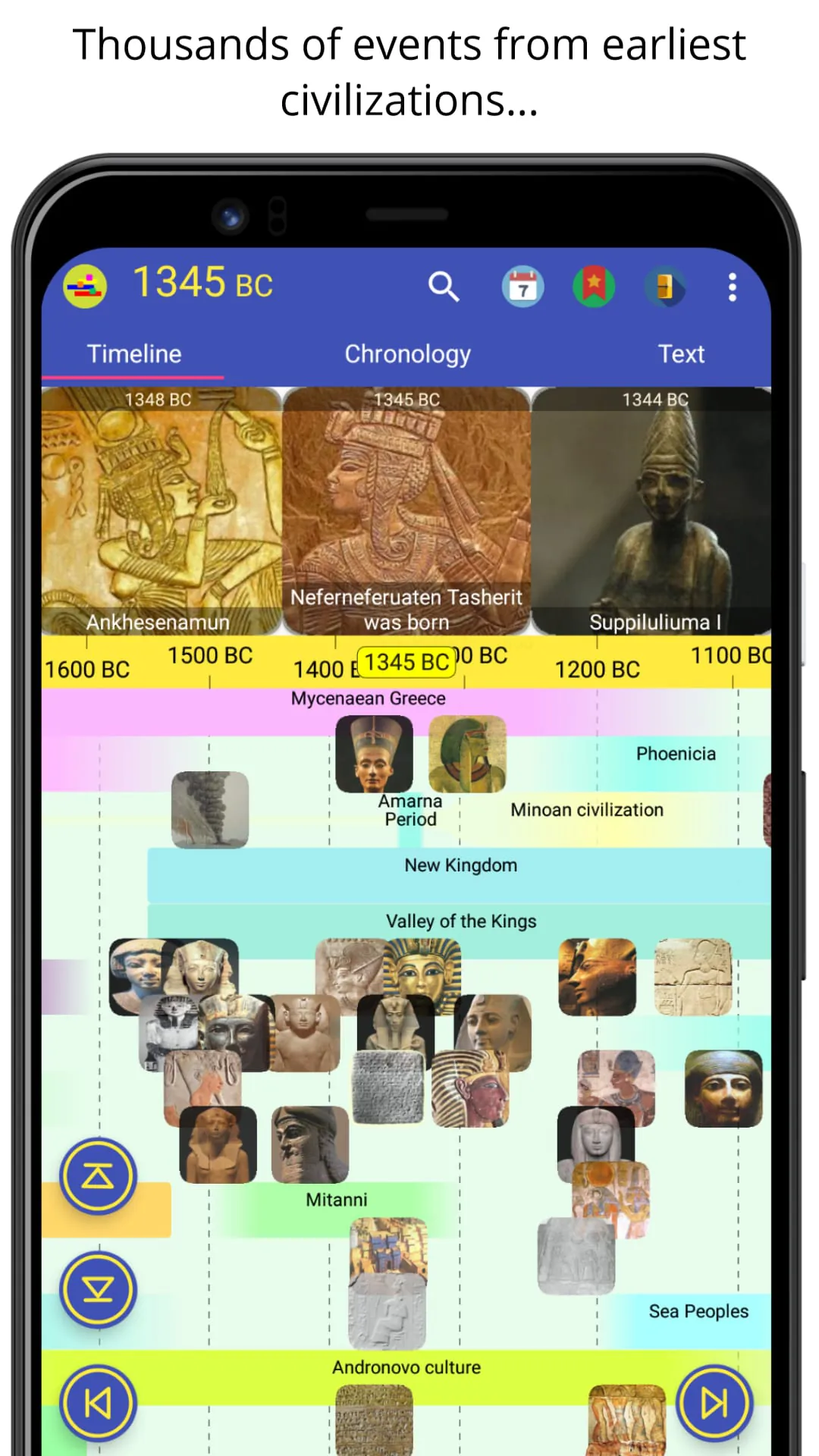
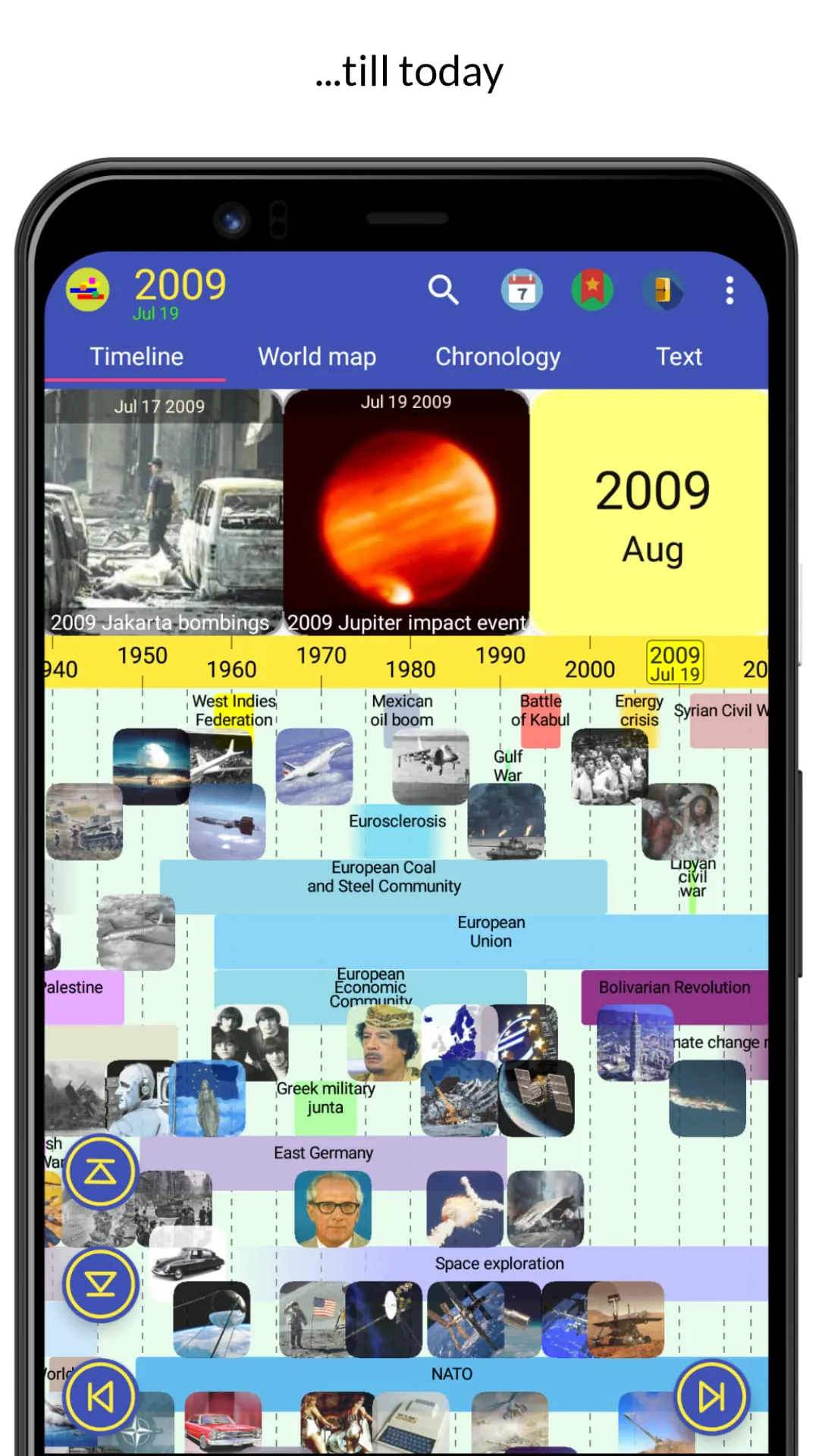
This application provides a comprehensive chronological and geographical presentation of historical topics and events, spanning from the earliest civilizations to the present day. It offers a detailed journey through human history, meticulously organized into various historical periods, including Prehistory, Antiquity, the Middle Ages, Early Modern Times, Modern Times, the 20th Century, and the 21st Century. Each period is further divided into specific eras and significant events, providing a rich tapestry of historical knowledge. Prehistory covers the Stone Age, Copper Age, Bronze Age, and Iron Age, laying the foundation for understanding early human development and technological advancements. Antiquity delves into the Ancient Orient, Egyptology, Greek Antiquity, and Rome, exploring the rise and fall of ancient civilizations such as Egypt, Sumer, Elam, Akkad, Babylonia, Hurrian, Hittite, Meder, Assyria, Israel, Phenicia, Persia, Ancient South Arabia, the Urartian Empire, Phrygians, Lydians, Luwier, Minoan Culture, Celts, Ancient Greece, Etruscans, Carthage, and the Roman Empire. The application also covers Late Antiquity, the Germanic tribes, and the migration of peoples, highlighting the transitional period between ancient and medieval times. The Middle Ages section explores the Frankish Empire, Byzantine Empire, Vikings, Crusades, Ottoman Empire, Hundred Years' War, Manorial system, serfdom, and the Sengoku time, offering insights into the political, social, and economic structures of medieval societies. Early Modern Times encompasses the Renaissance, European Expansion, Holy Roman Empire, Reformation, Counter Reformation, Wars of Religion, Enlightenment, Absolutism, Cabinet Wars, French Revolution, and American Revolution, showcasing the transformative events and intellectual movements that shaped the modern world. Modern Times covers Farmer Liberation, the Industrial Revolution, Liberalism, Communism, the Biedermeier era, social issues, Imperialism, World War I, World War II, colonialism, the October Revolution, the interwar period, the Holocaust, and expulsions, providing a comprehensive overview of the major conflicts, ideologies, and social changes of the modern era. The 20th Century section focuses on the Soviet Union, GDR, United Nations, Cold War, Eastern Bloc, proxy wars, arms race, turnaround, Middle East conflict, and the nuclear age, examining the geopolitical dynamics and technological advancements of the past century. Finally, the 21st Century section addresses contemporary issues such as climate policy, terrorism, financial crises, renewable energy, robotics, and artificial intelligence, highlighting the challenges and opportunities of the present day. The application's chronological and geographical approach allows users to easily navigate through history, gaining a deeper understanding of the interconnectedness of events and the evolution of human civilization. The inclusion of various historical periods and events makes this application a valuable resource for students, history enthusiasts, and anyone interested in learning more about the past.
The application features several thousand historical events across a diverse range of topics, providing users with a comprehensive understanding of the past. Military events and conflicts are extensively covered, including battles, sieges, naval battles, and religious wars. These events are presented with detailed information about the strategies, key figures, and outcomes, offering insights into the dynamics of warfare throughout history. Famous historical figures are also a prominent focus, with biographies and achievements of emperors, kings, dictators, authors, doctors, heroes, composers, inventors, explorers, geographers, navigators, military personnel, poets, philosophers, botanists, actors, revolutionaries, astronomers, popes, bishops, politicians, architects, enlighteners, and prophets. These figures represent a wide spectrum of human endeavor, from political leadership and scientific discovery to artistic expression and religious thought. Historical natural events are another key area of coverage, including thunderstorms, floods, earthquakes, storms, blizzards, volcanic eruptions, avalanches, and solar flares. These events illustrate the impact of natural forces on human societies, highlighting the challenges and adaptations that civilizations have faced throughout history. Astronomical events such as comets, meteors, solar eclipses, and supernovae are also included, providing a cosmic perspective on human existence. Technical achievements from various fields are showcased, including military technology, medicine, astronomy, chemistry, physics, biology, transportation, energy, architecture, and space exploration. These achievements demonstrate the progress of human innovation and its transformative effects on society. Historical societies and political ideologies are explored, including anarchism, absolutism, monarchism, fascism, communism, socialism, and others. These ideologies represent different approaches to governance and social organization, shaping the course of history in profound ways. Art styles and works of painting, music, and literature are also featured, including Gregorian chants, Impressionism, Orientalism, Baroque, Realism, Romanticism, Expressionism, Dadaism, Surrealism, Naturalism, Neoclassicism, Classicism, and Pop Art. These artistic movements reflect the cultural values and aesthetic sensibilities of different eras. Historical sports events such as World Championships and Olympics are included, highlighting the role of sports in fostering competition, national pride, and international cooperation. Religious events from various faiths are covered, including Christianity, Judaism, Hinduism, Islam, Buddhism, Shinto, Sikhism, Bahaitism, and Jainism. These events illustrate the diversity of religious beliefs and their influence on human societies. Finally, historical buildings from different eras are showcased, representing religion, military, economy, education, and other aspects of human life. These buildings serve as tangible reminders of the past, offering insights into the architectural styles, engineering techniques, and cultural values of different civilizations.
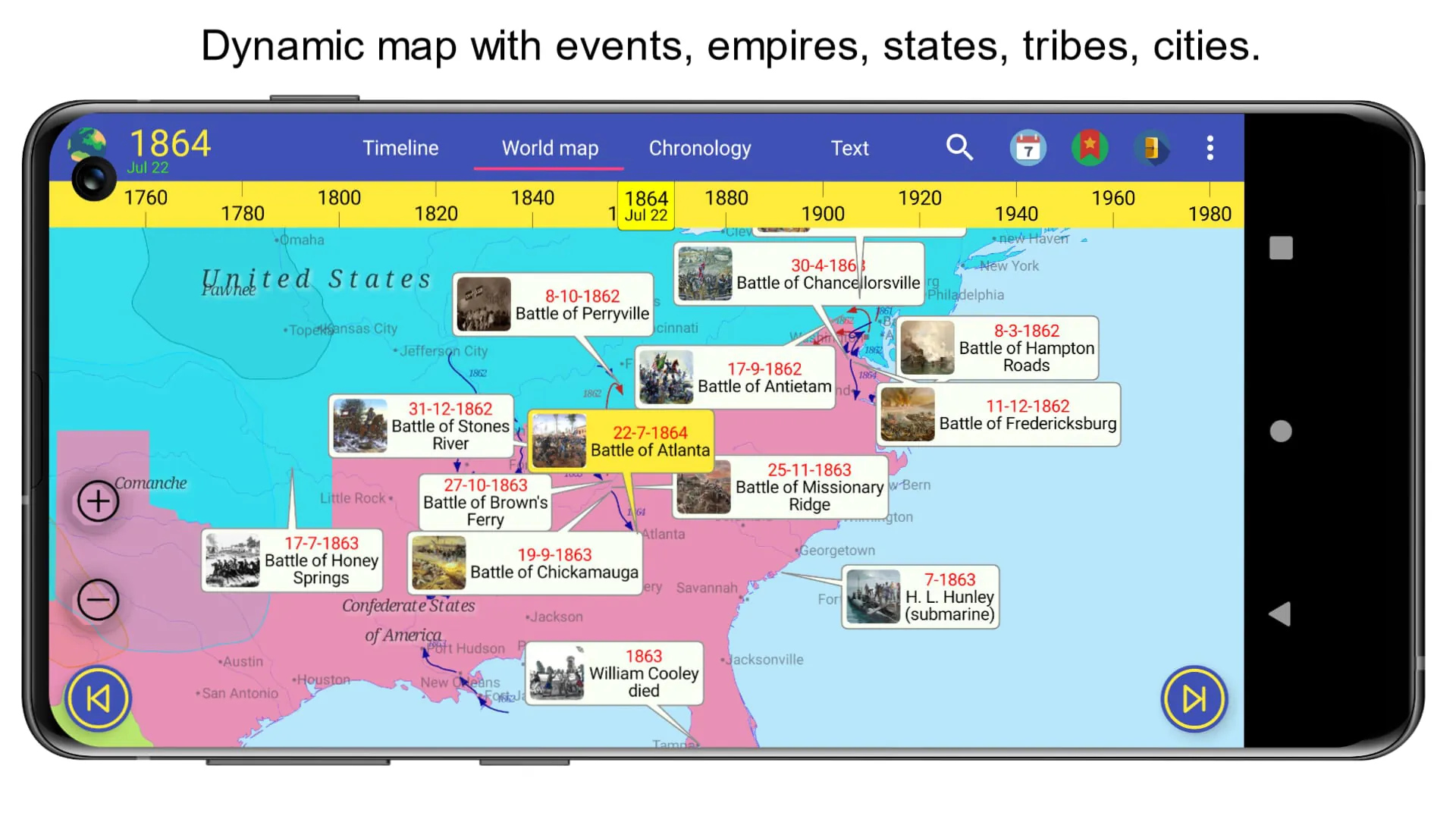
The application also includes a comprehensive map feature that visualizes historical events, empires, tribes, states, migrations, travel routes, expeditions, military operations, cities, places, and capitals. This map provides a geographical context for understanding historical developments, allowing users to see how events unfolded across different regions and continents. The application is designed for optimal performance, automatically installing on the SD card (if possible) to save internal memory. An initial data download of approximately 400 MB is required, but no internet connection is necessary afterwards, ensuring accessibility anytime, anywhere. The content is constantly being expanded with new information and features, promising an ever-growing wealth of historical knowledge. The sources for the application's content include Wikipedia, specialized literature, atlases, historical literature, and historical maps, ensuring accuracy and reliability. The application also refers to History4geeks, suggesting a community or platform dedicated to history enthusiasts. For questions or suggestions, users are encouraged to contact
[email protected]
, indicating a commitment to user feedback and continuous improvement. The application offers a money-back guarantee if there are any technical issues or if users are not satisfied, demonstrating confidence in the product's quality and functionality. The developer emphasizes the need for a stable internet connection only at the first start, highlighting the application's offline capabilities. Overall, this application is a valuable tool for anyone interested in exploring the vast and complex tapestry of human history. Its comprehensive coverage, user-friendly interface, and offline accessibility make it an ideal resource for students, educators, and history enthusiasts alike. The inclusion of maps, timelines, and multimedia elements further enhances the learning experience, providing a dynamic and engaging way to discover the past. The constant expansion of content and the commitment to user feedback ensure that the application remains a relevant and valuable resource for years to come. The combination of chronological and geographical perspectives, along with the detailed information on various historical events and figures, makes this application a standout among historical resources.





 APK
APK  Google Play
  iOS
iOS  4.20
4.20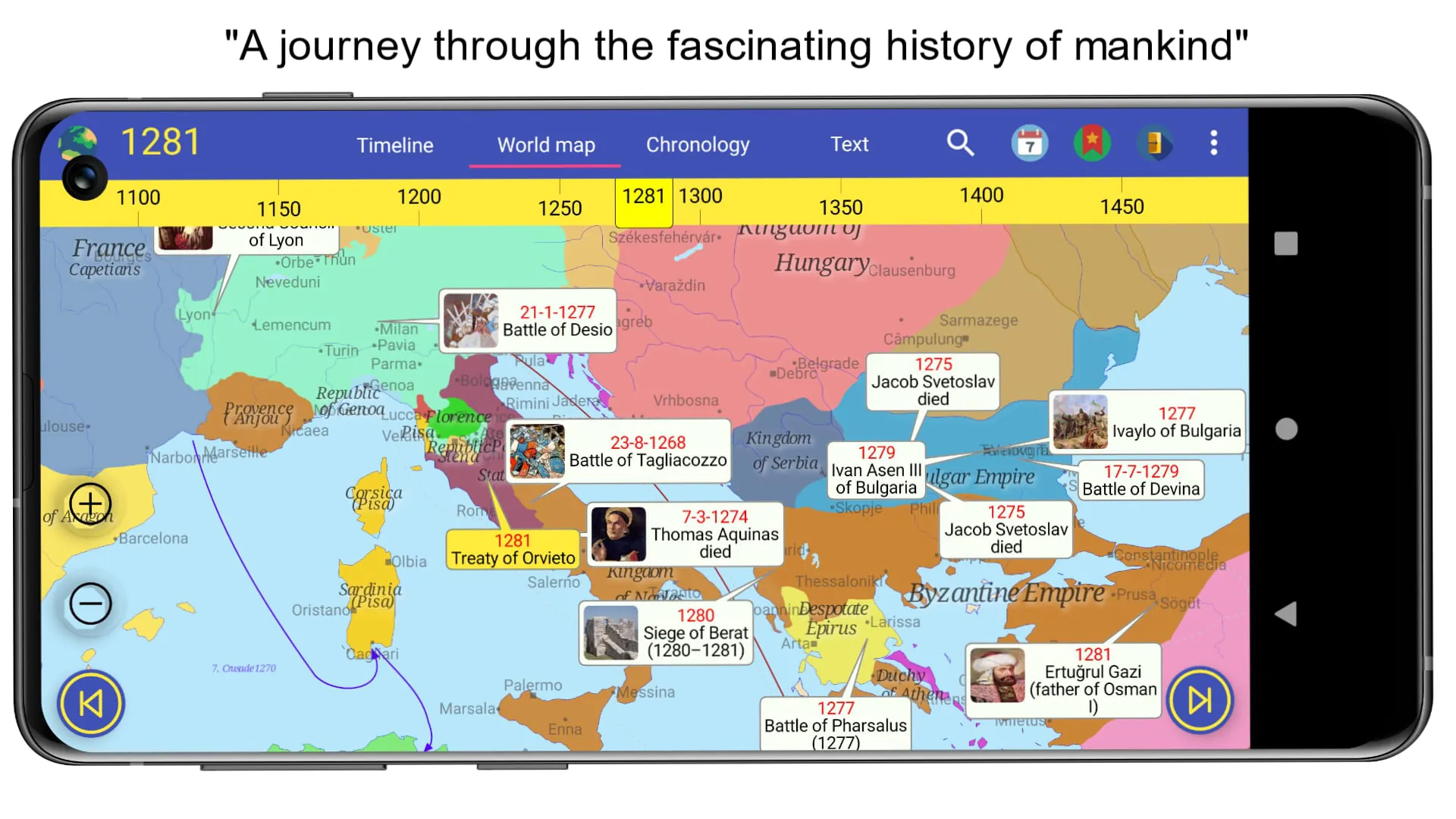
 Download