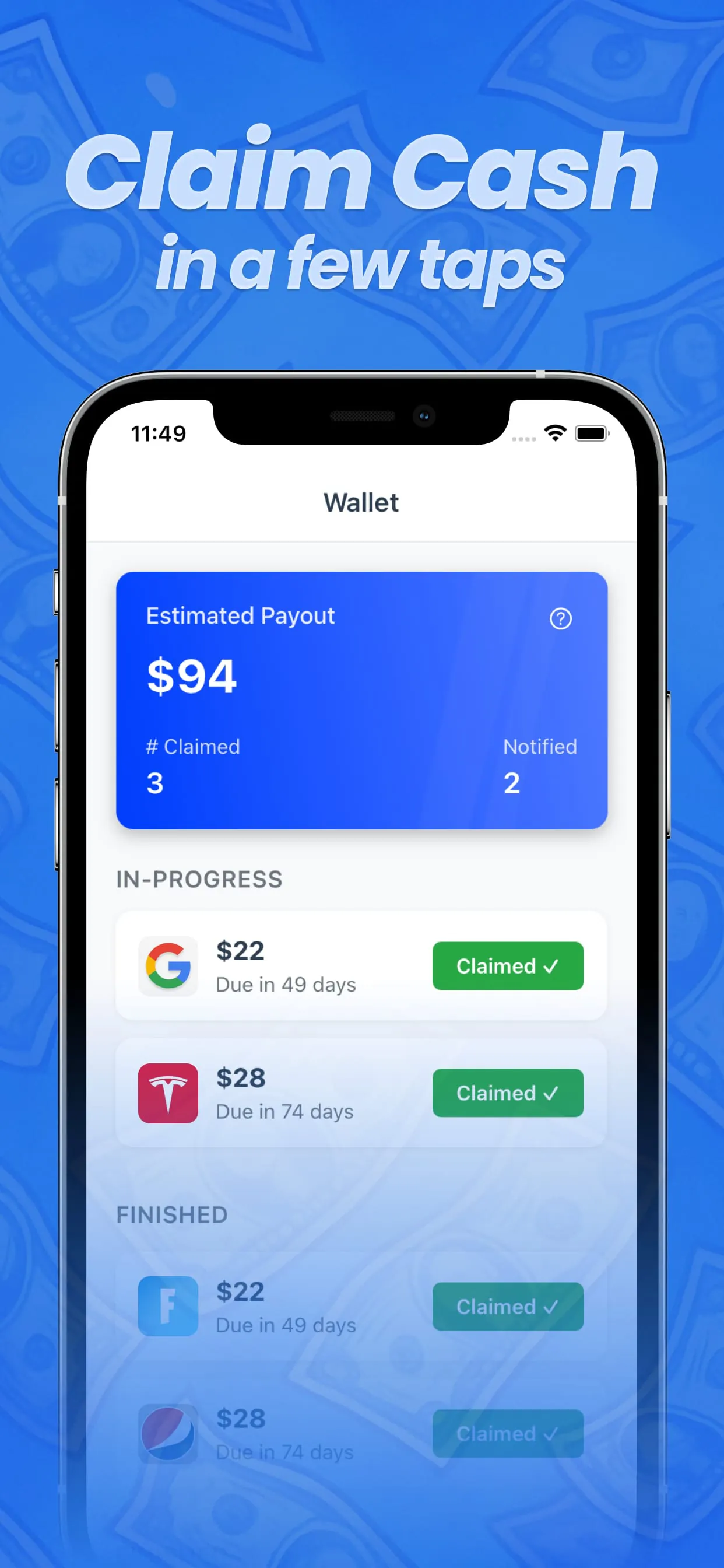
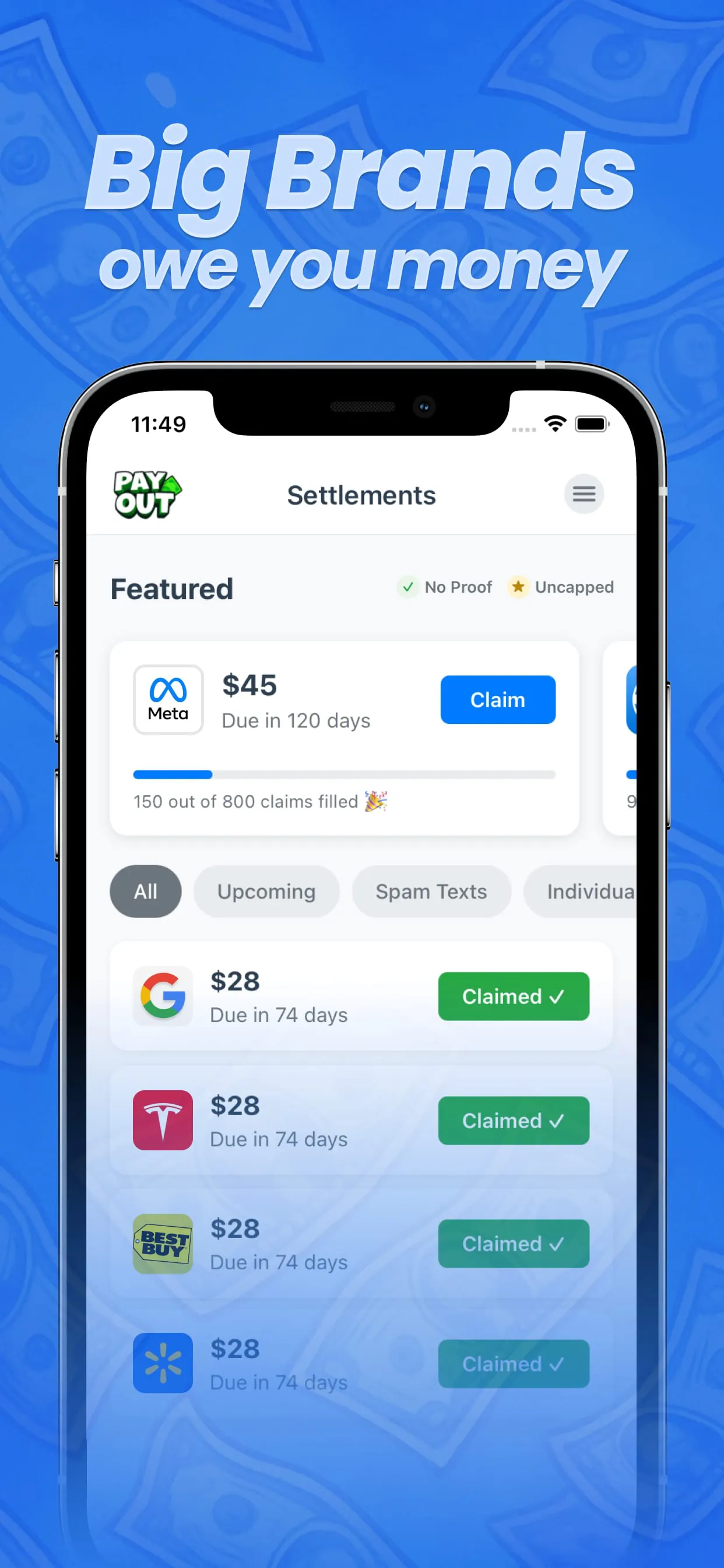
Payout is presented as a user-friendly platform designed to help individuals identify and claim money from class action settlements they may be eligible for. The service operates on the premise that many companies engage in practices that lead to lawsuits, such as hidden fees, false advertising, and defective products. Consumers who have purchased from these companies may be entitled to compensation from resulting settlements. However, a significant number of people miss out on these opportunities due to a lack of awareness or the complexities involved in identifying and filing claims. Payout aims to simplify this process by providing a streamlined interface where users can quickly determine their eligibility and navigate the claim filing procedures. The core functionality of Payout revolves around allowing users to select brands they have previously purchased from. Based on these selections, the platform identifies relevant class action settlements that the user may be eligible to join. This eliminates the need for users to sift through numerous legal documents and conduct extensive research to determine their eligibility. Payout essentially acts as an intermediary, connecting consumers with potential settlements in a more efficient and accessible manner. The platform emphasizes its ease of use, highlighting that it takes only minutes to check for and claim potential settlements. It also underscores that no legal expertise is required to utilize the service. Payout further enhances user convenience by offering alerts for new settlements that match a user's profile, ensuring that users stay informed about potential opportunities for compensation. It positions itself as a stress-free and straightforward way for individuals to earn extra money from purchases they have already made. Payout explicitly states that it is not a law firm and is not affiliated with any parties involved in the class actions it lists. It clarifies that it does not submit claims on behalf of users but rather provides the information and resources necessary for users to file claims directly. The platform emphasizes that all funds are distributed by official class action administrators and that Payout cannot guarantee any specific outcome or payout amount. This disclaimer is crucial for managing user expectations and ensuring transparency regarding the limitations of the service. Payout also offers a premium subscription option that unlocks additional features, although the specifics of these features are not detailed in the provided text. Overall, Payout presents itself as a convenient and accessible tool for consumers to navigate the often-complex world of class action settlements. By simplifying the process of identifying eligible settlements and providing the necessary information for filing claims, Payout aims to empower individuals to claim the compensation they are entitled to from companies that have engaged in questionable practices. The emphasis on ease of use, time savings, and lack of required legal knowledge positions Payout as an attractive solution for individuals seeking to capitalize on class action settlement opportunities without the burden of extensive research and legal complexities. The platform's disclaimers regarding its role and the guarantee of payouts further contribute to its transparency and credibility.
Payout’s primary value proposition lies in its ability to streamline and simplify the process of accessing class action settlements for consumers. The traditional method of identifying and claiming settlements often involves navigating complex legal documents, conducting extensive research, and understanding intricate eligibility criteria. This process can be time-consuming and daunting for the average consumer, leading many to miss out on potential compensation. Payout addresses this challenge by providing a user-friendly interface that automates much of the research and eligibility determination process. By allowing users to simply select the brands they have purchased from, Payout can quickly identify relevant class action settlements that the user may be eligible for. This eliminates the need for users to manually search for settlements and decipher complex legal language. The platform's emphasis on ease of use is a key differentiator, making it accessible to a wider audience, including those who may not have legal expertise or the time to dedicate to researching settlements. The alerts feature further enhances the platform's value by proactively notifying users of new settlements that match their profile. This ensures that users stay informed about potential opportunities for compensation without having to constantly monitor for new developments. The combination of automated eligibility determination and proactive alerts creates a seamless and efficient experience for users. Payout's business model is based on providing a valuable service to consumers while also generating revenue through optional premium subscriptions. The platform offers a basic level of service that allows users to identify and claim settlements for free, while the premium subscription unlocks additional features. This freemium model allows Payout to attract a large user base while also generating revenue from those who are willing to pay for enhanced functionality. The platform's marketing strategy focuses on highlighting the ease of use, time savings, and potential for free money. By positioning itself as a hassle-free way to earn extra cash, Payout appeals to consumers who are looking for a convenient way to capitalize on class action settlement opportunities. The platform's disclaimers regarding its role and the guarantee of payouts are also important for managing user expectations and maintaining transparency. By clearly stating that it is not a law firm and that it cannot guarantee specific outcomes, Payout sets realistic expectations and avoids misleading users. Overall, Payout offers a compelling solution for consumers who are seeking to access class action settlements in a more efficient and user-friendly manner. By automating the research and eligibility determination process, providing proactive alerts, and offering a freemium business model, Payout has the potential to become a leading platform in the class action settlement space.
Payout operates within the broader landscape of legal technology and consumer advocacy, aiming to bridge the gap between consumers and the legal system. The rise of legal tech has led to the development of various platforms and tools designed to simplify legal processes and make them more accessible to the general public. Payout aligns with this trend by focusing on the specific niche of class action settlements. The platform's success hinges on its ability to effectively identify and aggregate relevant settlement information, accurately determine user eligibility, and provide a seamless user experience. These factors are crucial for attracting and retaining users in a competitive market. Payout's value proposition is particularly relevant in today's environment, where consumers are increasingly aware of their rights and seeking ways to hold companies accountable for their actions. Class action lawsuits have become a common mechanism for consumers to collectively seek redress for grievances such as hidden fees, false advertising, and defective products. However, the process of participating in these lawsuits can be complex and time-consuming, creating a barrier to entry for many consumers. Payout aims to lower this barrier by simplifying the process and making it more accessible to the average consumer. The platform's long-term viability will depend on its ability to adapt to changes in the legal landscape and maintain its competitive edge. This includes staying up-to-date with new class action settlements, continuously improving its eligibility determination algorithms, and expanding its feature set to meet evolving user needs. Payout must also prioritize data security and privacy to protect user information and maintain trust. As a platform that collects and processes sensitive user data, Payout has a responsibility to implement robust security measures to prevent data breaches and unauthorized access. The company's privacy policy should be transparent and clearly outline how user data is collected, used, and protected. In addition to these technical and operational considerations, Payout must also navigate the legal and regulatory environment surrounding class action settlements. This includes complying with relevant laws and regulations, avoiding any potential conflicts of interest, and ensuring that its services are provided in a fair and transparent manner. Overall, Payout has the potential to play a significant role in empowering consumers and promoting greater access to justice. By simplifying the process of accessing class action settlements, Payout can help individuals claim the compensation they are entitled to and hold companies accountable for their actions. However, the platform's success will depend on its ability to effectively address the challenges and opportunities presented by the evolving legal and technological landscape.





 APK
APK  Google Play
  iOS
iOS  4.40
4.40