Calculating the distributed tongue weight is essential for ensuring that a vehicle and trailer are properly balanced, which enhances safety and performance during towing. The tongue weight is the downward force exerted at the coupling point of the trailer on the hitch of the towing vehicle. It is typically recommended that the tongue weight should be between 10% to 15% of the total trailer weight. This range helps to maintain stability and control while driving, preventing issues such as trailer sway or loss of control. To calculate the distributed tongue weight, one must first determine the total weight of the trailer, which includes the weight of the trailer itself and any cargo loaded onto it.
To begin the calculation, weigh the fully loaded trailer using a scale. This can be done at a truck stop or a weigh station, where the total weight of the trailer can be recorded. Once the total weight is known, the next step is to calculate the desired tongue weight. For example, if the total weight of the trailer is 5,000 pounds, the ideal tongue weight would be between 500 pounds (10% of 5,000) and 750 pounds (15% of 5,000). This range ensures that the trailer is not too heavy on the hitch, which could lead to excessive strain on the vehicle's suspension and steering, nor too light, which could result in instability and swaying during travel.
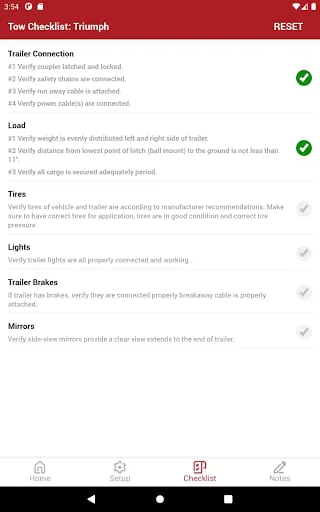
After determining the ideal tongue weight, the next step is to adjust the load within the trailer to achieve this balance. This may involve redistributing cargo or adjusting the position of the trailer axle. If the tongue weight is too low, moving some of the cargo forward can help increase it. Conversely, if the tongue weight is too high, moving cargo towards the rear of the trailer can help reduce it. It is also important to ensure that the trailer is level when hitched to the vehicle, as an unlevel trailer can affect the tongue weight and overall towing dynamics. Regularly checking the tongue weight and making necessary adjustments can significantly improve towing safety and performance, making it a crucial aspect of trailer management.




 APK
APK  Google Play
  iOS
iOS  2.50
2.50
 Download