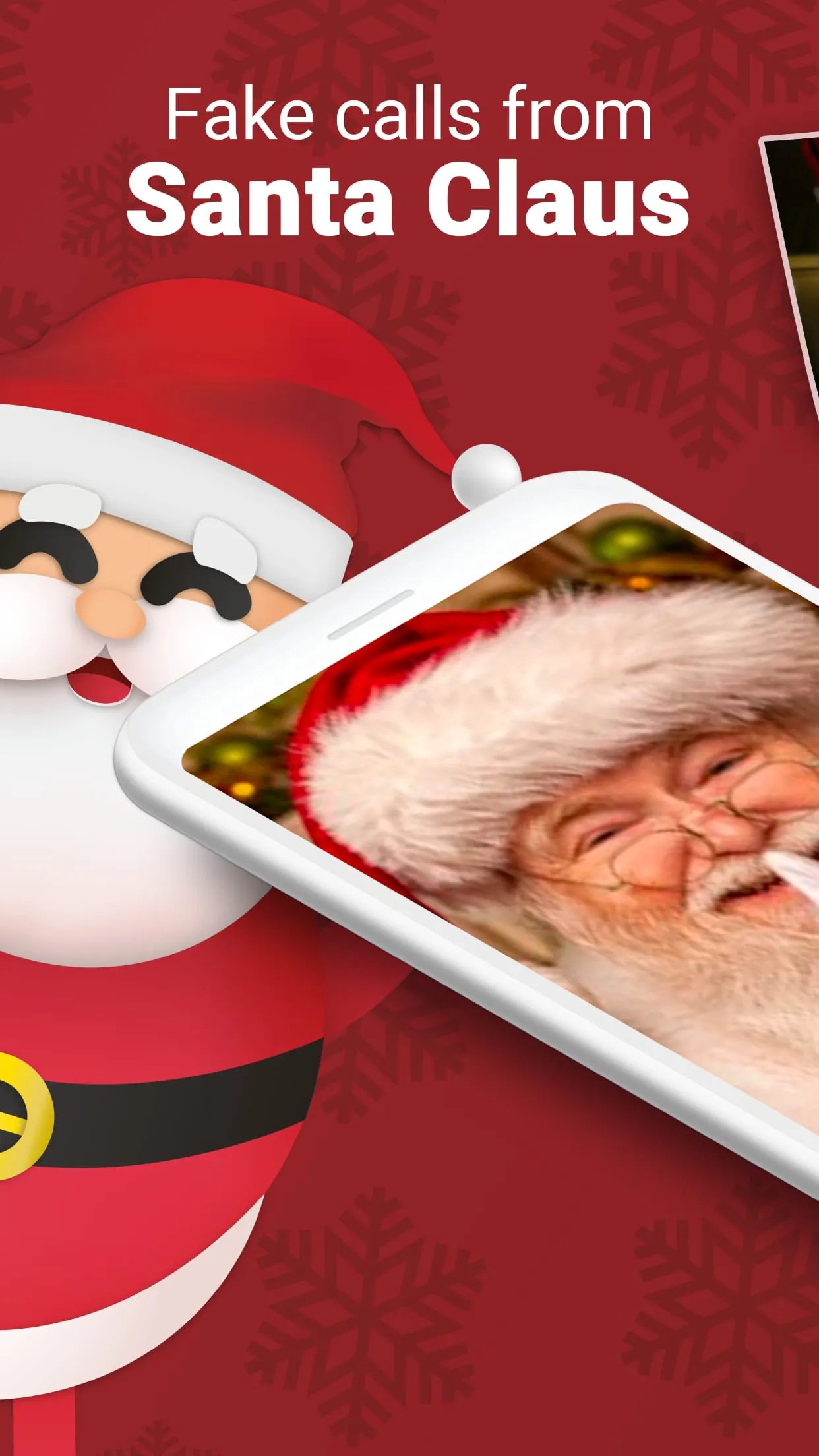
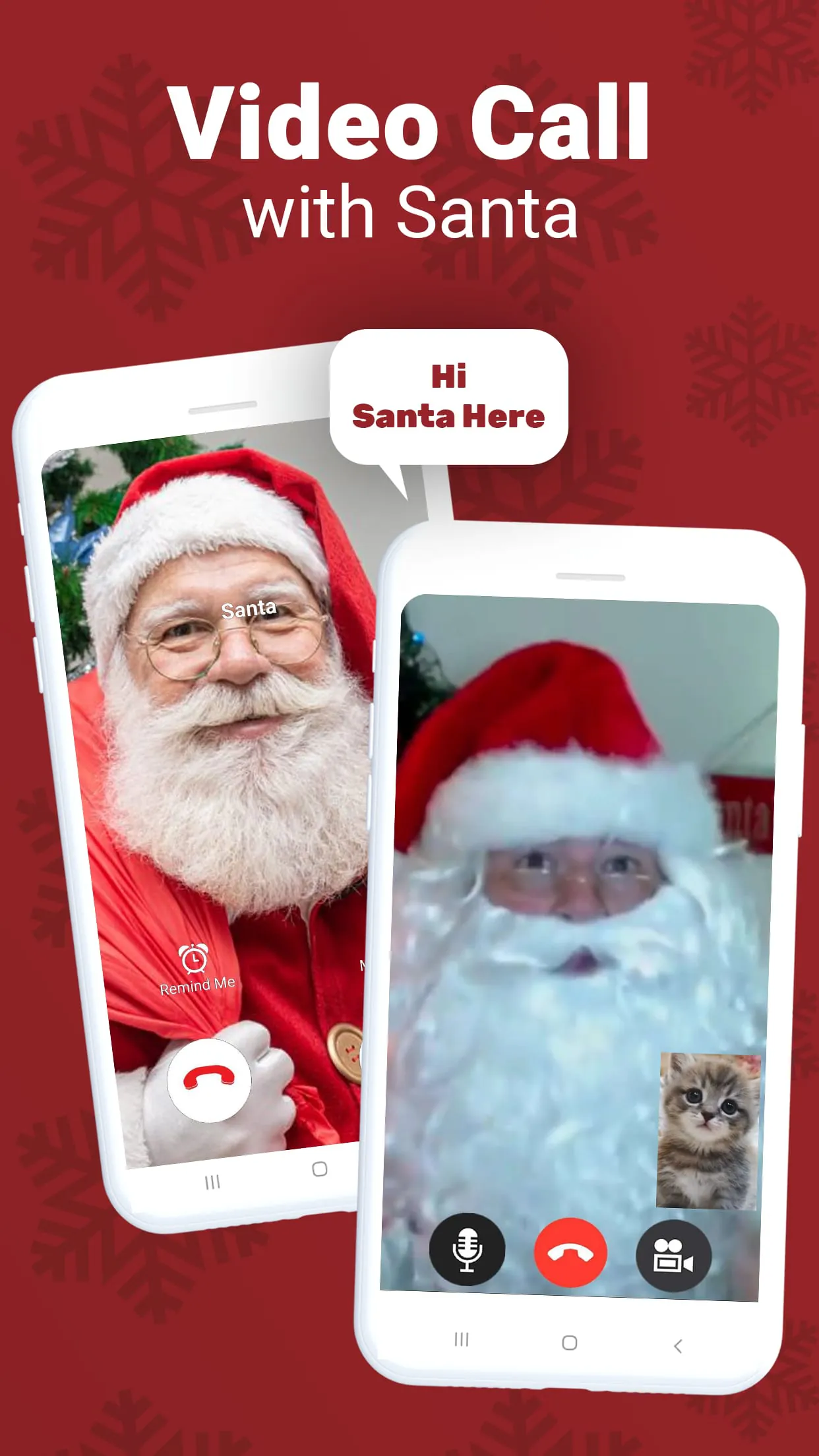
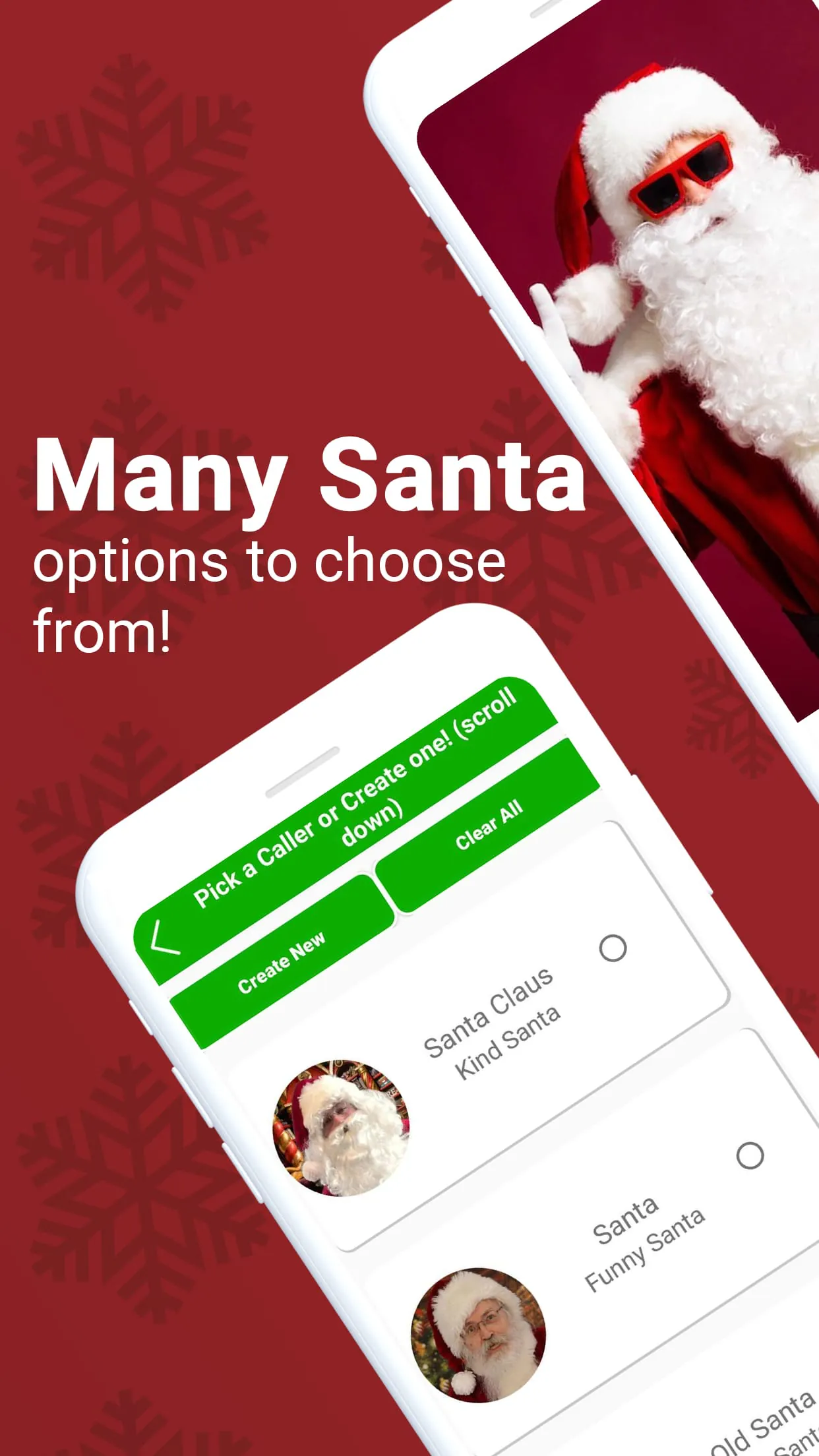
The text describes a fake Santa Claus app designed for entertainment and pranking purposes. The app allows users to simulate incoming calls and video calls from Santa Claus, as well as engage in a text-based chat with Santa. The core function of the app revolves around creating realistic simulations that can fool friends and family into believing they are interacting with the real Santa Claus. The app features multiple options for simulating calls, including voice calls with Santa's iconic greetings and laughter, and video calls with a selection of different Santa Claus characters, one of which humorously includes a cat. The application aims to enhance the Christmas spirit by providing users with a fun and engaging way to play pranks and surprise their loved ones during the festive season. It is emphasized that the app is purely for entertainment, and no actual communication with the real Santa Claus is possible. The app developers provide various scenarios in which the fake call can be used to brighten moods, entertain children, or excuse oneself from unwanted social situations. Users can also capture screenshots of their simulated conversations and video calls with Santa to share on social media. The text promotes the app's ability to bring joy and laughter during the Christmas season and encourages users to download it for a lighthearted and amusing experience. The application also includes a disclaimer clarifying that it is intended for entertainment purposes only, underlining the simulated nature of the interactions with Santa Claus. Additional features in the application are highlighted to enrich user experience, such as different video call options with seven distinctive Santas, the inclusion of Santa's signature 'Ho Ho Ho' laugh, and the ability to add custom Santa videos for more personalized pranks. The Santa chat feature allows users to exchange text messages with Santa, adding an element of interaction and playfulness. The instructions for using the app are simple and straightforward: users choose between a chat, phone call, or video call; select a video from the seven available options if choosing a video call; and then enjoy the experience, capturing screenshots to share online if desired. Different ways to have fun with the app include surprising friends and family during the Christmas holidays, using the app when feeling lonely to engage with the Christmas legend, capturing and sharing cool video call screenshots to impress others, or using the fake call as an excuse to avoid unwanted social engagements. The overall purpose of the app is to spread Christmas cheer and create memorable moments through lighthearted and humorous interactions, all while clearly communicating that the app is purely for entertainment and not a means of contacting the real Santa Claus. The text continually reinforces this distinction, ensuring users understand the simulated nature of the app's features. The variety of options within the app, such as different Santa characters for video calls and the chat feature, enhance its appeal and versatility, catering to a range of preferences and prank ideas. The app is designed to be accessible and easy to use, ensuring that users can quickly start enjoying its features without any complications. By offering multiple ways to engage with the Santa simulation, the app aims to maintain user interest and provide a consistently entertaining experience throughout the Christmas season. Ultimately, the app is presented as a tool for creating joyful and amusing moments, emphasizing the importance of laughter and lightheartedness during the festive season. The clear disclaimer and focus on entertainment ensure that users understand the app's purpose and manage their expectations accordingly, making it a responsible and enjoyable addition to their holiday festivities.
The marketing strategy of the fake Santa Claus app is focused on highlighting its entertainment value and its ability to create fun and engaging experiences during the Christmas season. The text emphasizes the app's role in spreading joy and laughter, positioning it as a tool for pranking friends and family in a lighthearted and festive manner. The diverse range of features, including fake voice calls, video calls, and text chats with Santa, are showcased to attract a wide audience with varying preferences for entertainment. The use of humor is central to the app's appeal, with the inclusion of Santa's iconic laughter and the humorous option of a Santa Claus character that is actually a cat. The text also focuses on the emotional aspect of Christmas, suggesting that the app can bring people together and create memorable moments. By promoting the app as a way to surprise and delight loved ones, it taps into the desire for connection and celebration that is characteristic of the holiday season. The marketing approach is designed to be accessible and relatable, using simple language and clear instructions to ensure that users of all ages can easily understand and use the app. The emphasis on ease of use is intended to remove any barriers to adoption, encouraging users to download and start enjoying the app immediately. The promotional material also includes specific scenarios in which the app can be used, such as excusing oneself from unwanted social situations or entertaining children, demonstrating its versatility and practical applications. By highlighting these diverse use cases, the app is positioned as a valuable tool for navigating the social and emotional challenges of the Christmas season. Furthermore, the marketing strategy leverages social media by encouraging users to capture and share screenshots of their simulated conversations and video calls with Santa. This approach not only promotes the app's visibility but also encourages user-generated content, which can further enhance its appeal and credibility. The consistent reinforcement of the app's entertainment purpose and the clear disclaimer serve to manage user expectations and ensure that the app is used responsibly. This transparency is crucial for maintaining trust and preventing any misunderstandings about the app's capabilities. Overall, the marketing strategy is carefully crafted to appeal to a broad audience by emphasizing the app's entertainment value, emotional benefits, and ease of use, while also maintaining transparency and responsible communication. By positioning the app as a fun and engaging way to celebrate Christmas, the marketing aims to drive downloads and encourage users to share their experiences, ultimately contributing to the app's success. The integration of humor, emotional connection, and practical applications makes the app an attractive option for those seeking to enhance their Christmas experience and create memorable moments with loved ones.
The technical specifications of the fake Santa Claus app can be inferred from the text, which describes various features and functionalities. The app likely includes a user interface that allows users to select different options, such as initiating a voice call, video call, or text chat with Santa. The user interface would need to be intuitive and easy to navigate, ensuring that users can quickly access the desired features without any difficulties. The app probably uses pre-recorded audio clips of Santa Claus's voice, including his iconic laughter and greetings, which are played during simulated voice calls. The audio clips would need to be of high quality to create a realistic and engaging experience for the user. For video calls, the app likely incorporates a library of pre-recorded videos featuring different actors portraying Santa Claus. The videos would need to be visually appealing and well-produced to enhance the illusion of a real video call. The app also includes a text chat feature, which would require a text input field and a display area for showing the conversation between the user and the simulated Santa Claus. The chat feature would need to be responsive and easy to use, allowing users to type and send messages quickly. The app may also include options for customizing the Santa Claus character, such as selecting different outfits or accessories. This feature would require a database of available customization options and a mechanism for applying these options to the Santa Claus character. In terms of software development, the app could be built using various programming languages and frameworks, depending on the target platform (e.g., iOS, Android). The development team would need to consider factors such as performance, scalability, and security when choosing the appropriate technologies. The app may also integrate with social media platforms, allowing users to share screenshots and videos of their simulated interactions with Santa Claus. This integration would require the use of social media APIs and adherence to the platforms' terms of service. The app's architecture would need to be designed to handle a large number of users and ensure that the app remains responsive and stable even during peak usage times. This may involve using cloud-based infrastructure and optimization techniques to improve performance. Overall, the technical specifications of the fake Santa Claus app would include a user-friendly interface, high-quality audio and video assets, a responsive chat feature, customization options, social media integration, and a scalable architecture. The development team would need to carefully consider these factors to create an app that is both entertaining and technically sound.





 APK
APK  Google Play
  iOS
iOS  4.40
4.40