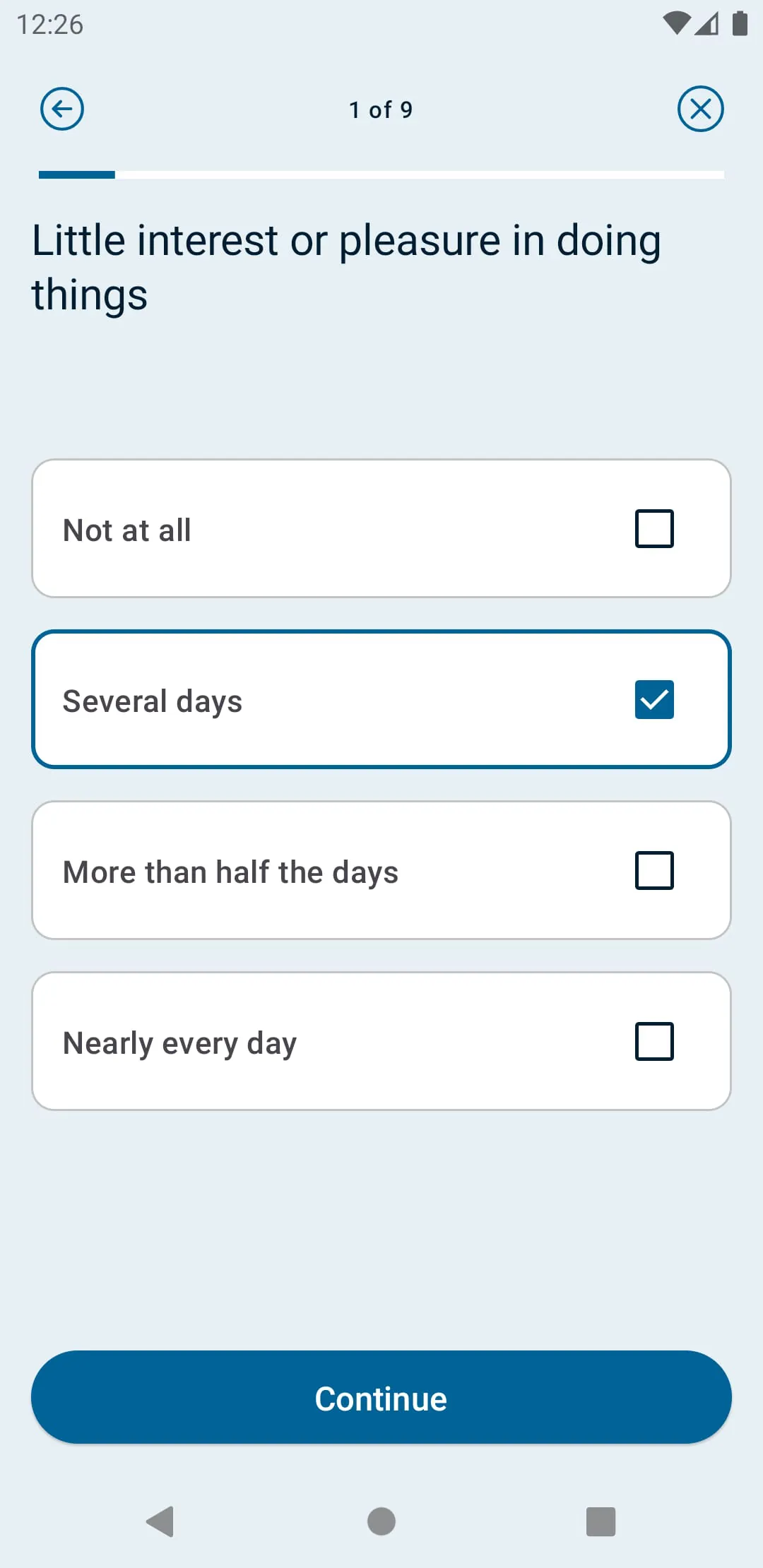
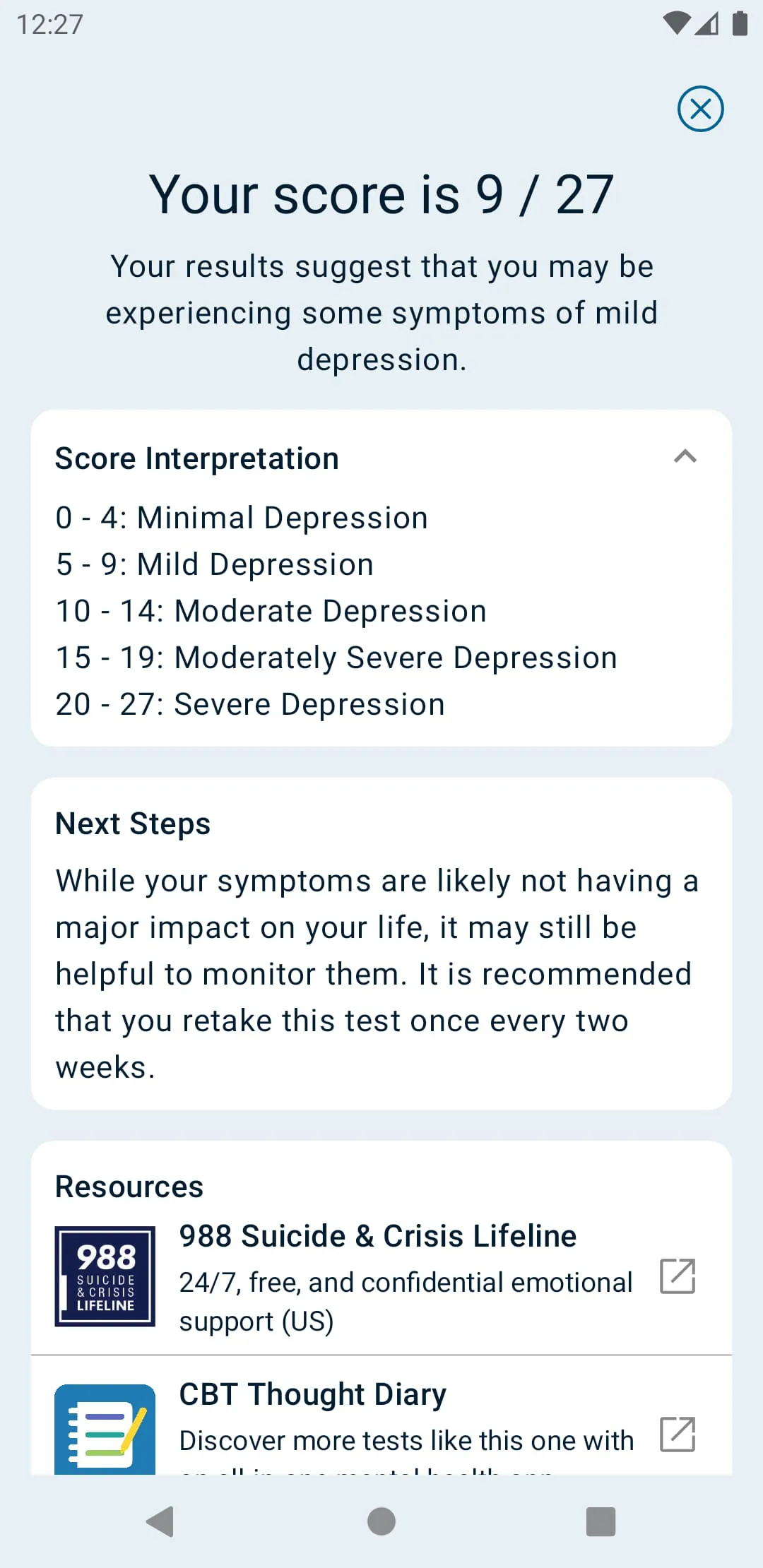
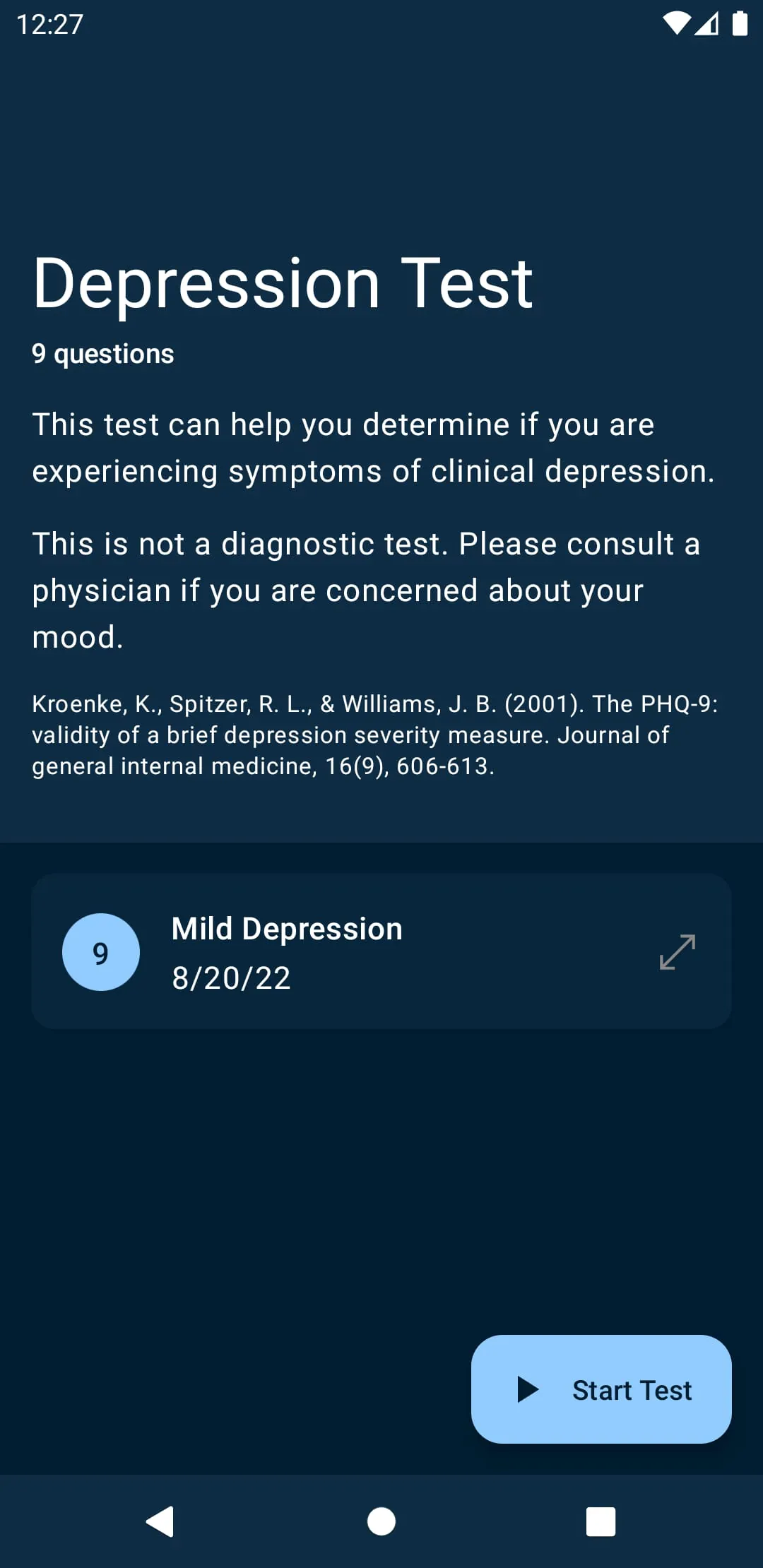
The Depression Test application is designed as a self-assessment tool to help individuals evaluate the severity of their depression through a series of nine questions. It is based on the Patient Health Questionnaire (PHQ-9), which is an empirically-based self-test questionnaire widely used in clinical settings. The application highlights that clinical depression is a mood disorder characterized by persistent feelings of sadness, loss, anger, or frustration that significantly interfere with daily life for an extended period, typically weeks or longer. The app emphasizes the treatable nature of clinical depression, encouraging users to seek professional help if they have concerns about their mental health. The application includes a new feature that allows users to maintain the privacy of their results through a passcode lock, adding an extra layer of security and confidentiality. The disclaimer is a crucial part of the application, explicitly stating that the self-test is not intended as a definitive diagnosis for depression. It underscores the importance of professional treatment and guidance, advising users not to rely solely on the app as a substitute for consultations with qualified healthcare providers. The disclaimer serves to manage user expectations and ensure responsible use of the tool, preventing self-diagnosis and promoting appropriate medical advice. The application also serves as an introduction to MoodTools, which is a suite of applications designed to combat clinical depression. The goal of MoodTools is to provide a free, convenient, and easy-to-use Android smartphone application suite that offers empirically-supported tools to help individuals manage their depression. The application is designed to be user-friendly and accessible, aiming to reach a large number of people who may be struggling with depression. By offering tools that are based on scientific research, MoodTools aims to provide effective and reliable support for individuals seeking to improve their mental health. The emphasis on empirical support ensures that the tools and techniques offered within the suite are grounded in evidence-based practices, increasing their potential for positive outcomes. The application is positioned as a valuable resource for individuals seeking to understand and manage their depression, while also emphasizing the importance of professional medical advice and treatment when needed. The combination of self-assessment tools and empirically-supported interventions makes the application a comprehensive resource for individuals seeking support for their mental health. The application's accessibility and user-friendly design make it a valuable tool for reaching a wide audience, promoting early intervention and facilitating access to mental health resources. The focus on privacy and security through the passcode lock feature ensures that users can confidently use the application without concerns about the confidentiality of their personal information. The application's integration with MoodTools further enhances its value by providing users with a suite of tools and resources designed to address various aspects of depression management. The overall goal of the application is to empower individuals to take proactive steps in managing their mental health, while also emphasizing the importance of seeking professional help when necessary. The application's design and content reflect a commitment to responsible and ethical use of technology to support mental health, ensuring that users are well-informed and encouraged to seek appropriate medical advice.





 APK
APK  Google Play
  iOS
iOS  4.30
4.30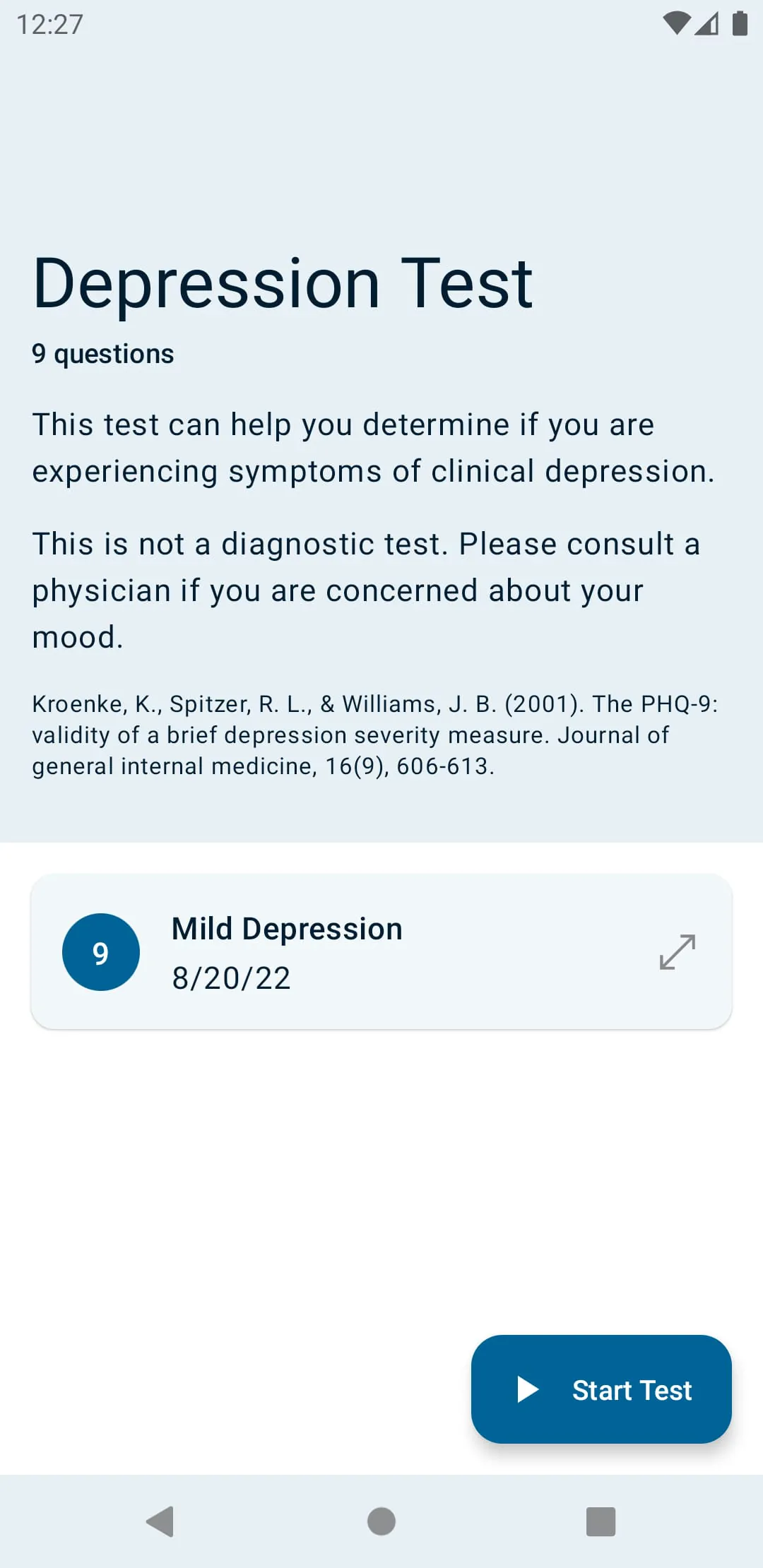
 Download